
Newest Posts
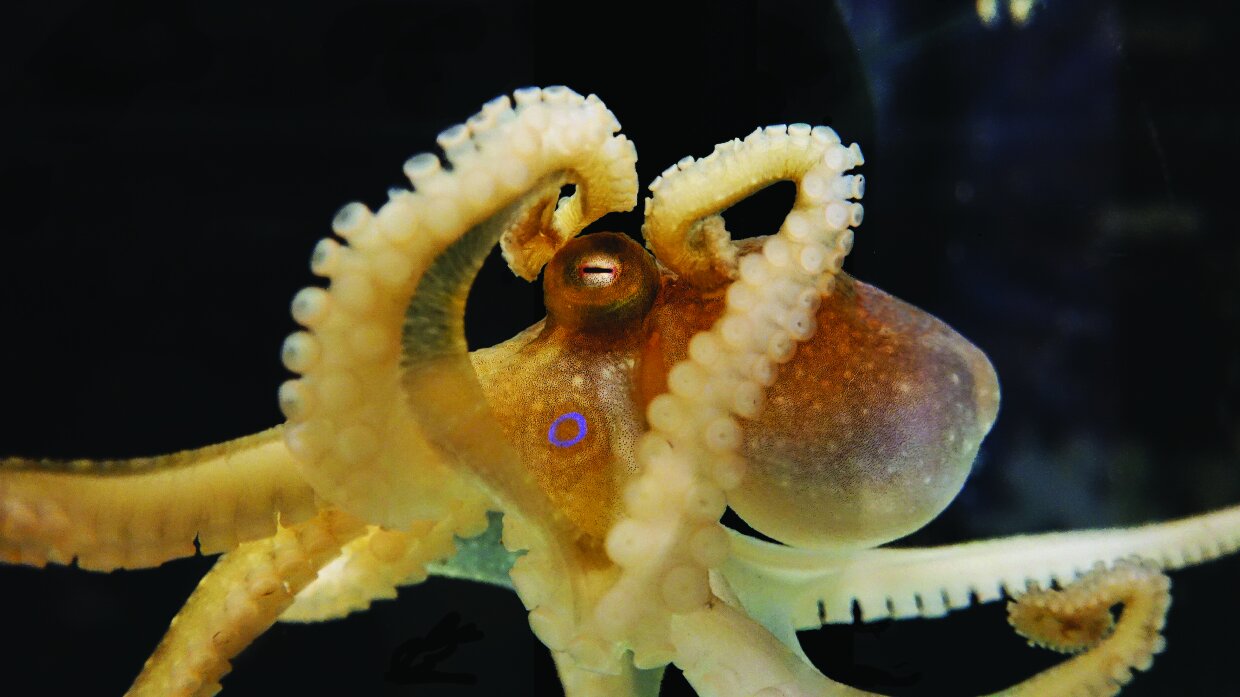
ARE OCTOPUSES MORE HUMAN THAN WE ARE?
We’ve all heard stories of scientists turning up amazing discoveries in the most unexpected places. In fact, sometimes it seems like most of the greatest scientific discoveries happened completely by accident. This is largely because not knowing the answer makes it hard for scientists to ask the right questions. This story is no exception, because when a group of scientists (including former Stanford Ph.D. student Judit Pungor) decided to take on the mighty task of sequencing the entire genome of the California two-spot octopus, they did it hoping to learn more about these strange animals and maybe figure out which genes make them so different from other mollusks. They certainly didn’t expect to learn that octopus and humans have something very important in common.

A GUT FEELING
Did you know that our bodies are mostly bacteria? For every human cell in our body, there are ten tiny microbes living on our skin, in our mouth, or throughout our digestive tract. Humans and bacteria have evolved together for thousands of years. We have a symbiotic relationship with our bacteria: they rely on us for a safe environment and a regular food supply, and in turn, they help us digest our food and produce chemicals that increase our evolutionary fitness as a species. The bacterial population in our gut alone weighs 2-3 pounds, which is about the same weight as the brain! In fact, our gut bacteria may actually have a bigger effect on our brains than we realize.

WHO CAME UP WITH BLOOD TYPES AND WHAT DO THEY MEAN?
A few weeks ago, I realized I had no idea about one of the most basic aspects of my own body – my blood type Sure, my parents or some computer database at my doctor’s office probably had it written down, but there was something about not knowing myself that bothered me. So I decided to take to the internet and end this question once and for all.

(IT'S NOT ALL ABOUT) LOCATION, LOCATION, LOCATION
Imagine for a moment that you’re an oncologist, a doctor specializing in cancer diagnosis and treatment. You’re assigned ten patients: five with lung cancer and five with pancreatic cancer. Now, I want you to group these patients into two categories for treatment.