
Newest Posts
OCEAN CSI
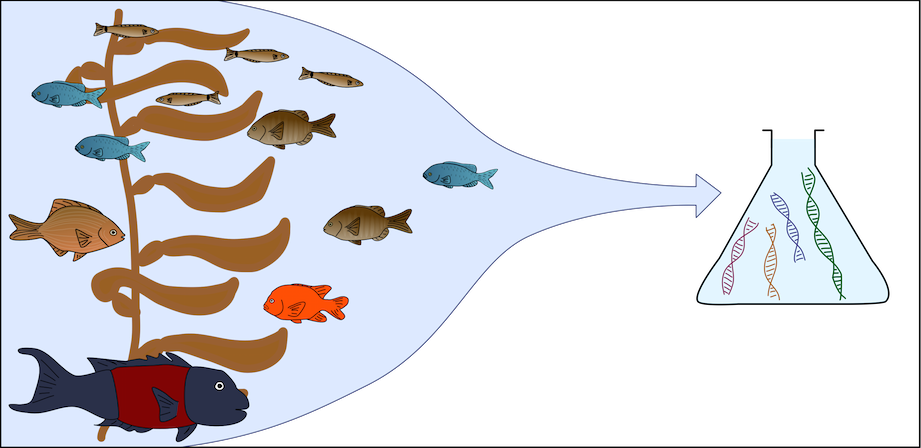
University of Southhampton scientist John Shepherd once said that counting fish is like counting trees, except that they keep moving around and you can’t see them because they’re underwater. And marine biologists spend a whole lot of time, effort, and money counting fish. They put on SCUBA tanks, jump into the cold ocean, and try to count and identify as many fish as possible before they run out of air. They drag big nets through the water to collect open-ocean fish. And they puzzle through jumbles of information from fisheries, historical records, and even people’s vacation photographs to try and reconstruct fish population numbers. There is little doubt that these data are vital to understanding and protecting, and managing fish populations and the ecosystems they inhabit. But most of these methods are not very efficient: They require a lot of manpower and resources to get small amounts of valuable data. Could there be a better way?
THE URCHIN’S TALE, PART 1
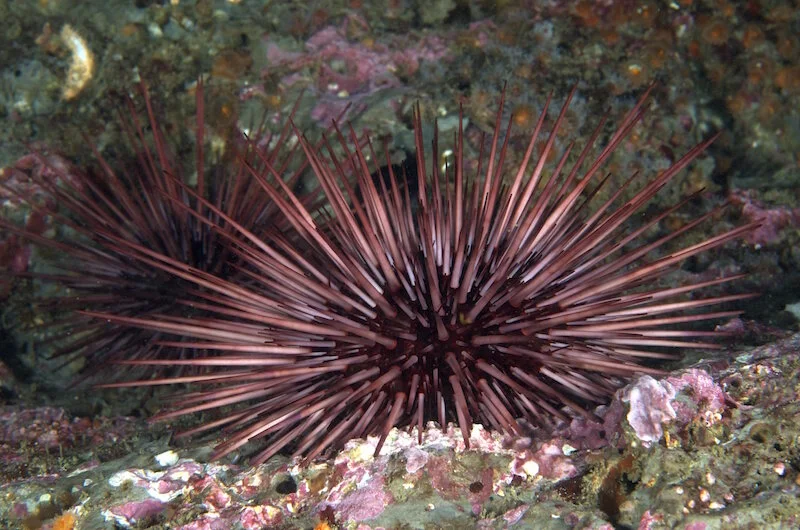
Sea urchins have been at the center of many scientific insights that shaped the way we understand the natural world. They have taught us many different things - from the workings of entire ecosystems, to the workings of tiny cells. In this series, I will highlight some of the ways that these animals have helped us better understand ourselves and our world.

AN ANCIENT SQUID WITH MODERN IDEAS
What if you had to wear a huge backpack all the time? Quick, agile movements would become much more difficult, and you'd probably get tired pretty fast. Maybe you would downsize the items in your pack to fit into your pockets. Or you might change your way of life and get rid of material possessions altogether. These were the issues that ancient ancestors of the squid faced when they began to free themselves from life on the seafloor 400 million years ago. Abundant fossils of preserved hard parts give clues to what these ancestors probably looked like: Imagine a modern squid curled up and stuffed into a cumbersome shell, limited to crawling on the seafloor. But with all that bulk on their backs, scientists still puzzled over how the ancient animals might have moved. Direct observation of extinct animals is impossible, but recent fossil finds of soft body parts may provide an answer.

THE FRUITS OF RESEARCH: THE TRUTH ABOUT VITAMIN C AND THE COMMON COLD
Ever wondered if taking vitamins really helps prevent colds? Or why eating oranges and other fruits can keep you healthy? Vitamin C works hard to keep your immune system strong. Think of it like a power boost to the troops. However, this power boost may not stop the dreaded common cold