Newest Posts

QUANTIFYING THE EFFECTS OF ANTI-VACCINE SENTIMENT ON THE SPREAD OF DISEASE
Anti-vaccine sentiment is as old as vaccination itself. In 1801, Edward Jenner published his results of the success of his early experiments on the smallpox vaccine, and by 1802, enough people were scared of it that political cartoonist James Gillray produced an extremely unsubtle satirical painting entitled “The Cow-Pock—or—the Wonderful Effects of the New Inoculation!”
MORE THAN JUST A LIQUID
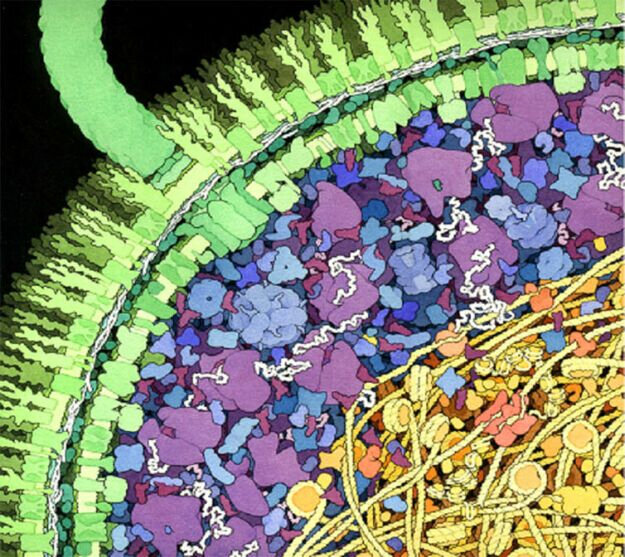
The space inside your cells is quite crowded and many cellular contents are more liquid than solid. How do our cells make sense of all the different interrelated liquid parts that make them up? Phase separation. Phase separation describes the separation of liquids, gasses, and solids (different phases of matter) but it can also refer to the tendency of some liquids to stay separate, like oil and vinegar in a vinaigrette. Liquids like these have inherent chemical differences that make the molecules of one liquid repulsive toward molecules of another liquid but attracted to themselves. Therefore, liquids in this situation like to segregate into separate parts that we can also call phases. The different liquid phases in a mixture can distribute as layers or as droplets of one liquid within another. Cells can concentrate different proteins and nucleic acids into temporary phase-separated liquid droplets that can perform specific tasks to help cells respond to the world around them.
COO COO - THE DOCTOR IS IN
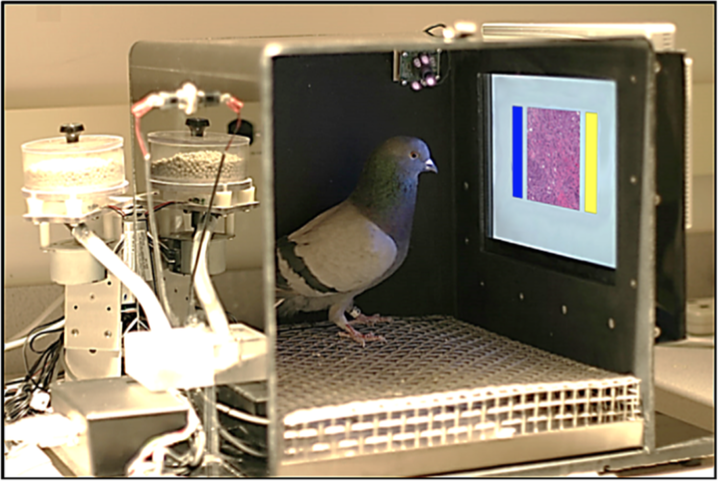
Clinicians spend years training to accurately interpret medical imaging like X-rays in order to recognize and diagnose diseases. However, a recent research article identifies an unlikely candidate for interpreting medical images: Columba livia, an animal you might recognize as the common pigeon. Researchers in this study showed that, with food reward and several days of practice, it is possible to train pigeons to tell the difference between healthy and cancerous tissue.