
From Cells to Cures: How CAR-T, TCR, and TIL Are Transforming Cancer Care
What if your own cells, when faced with the threat of cancer, could be trained to fight back better than a drug? What if that drug was composed of your own cells? This is the premise of cellular immunotherapy, a type of cancer treatment that helps your immune system to identify and mobilize against cancer. Many cancer treatments like chemotherapy are untargeted, so cancer immunotherapies might provide a more targeted and effective way of killing cancer cells. There are three main categories of cellular immunotherapy that may be used to treat a diverse suite of cancer types that rely on T-cells: CAR-T, TCR, and TIL.
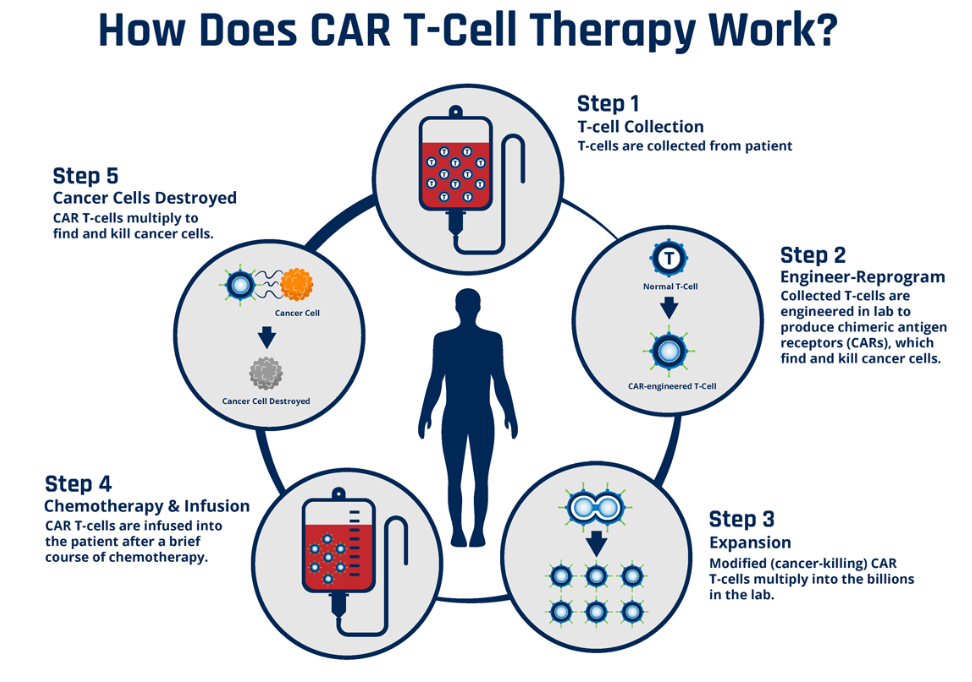
T-cells are a type of white blood cell and a key part of the immune system that acts as the body’s defense force, specifically targeting and killing foreign or cancerous cells. Chimeric antigen receptor (CAR) T-Cell therapy removes T-cells from the patient’s bloodstream before sending them to a manufacturing laboratory. In the laboratory, these T-cells are genetically engineered, or reprogrammed, to produce special receptors on their surface called CARs that more effectively recognize proteins on the surface of a cancer cell. Now that these T-cells are better able to recognize and kill cancer cells, scientists multiply the enhanced T-cells into the billions before infusing them back into the patient to target and kill cancer cells.
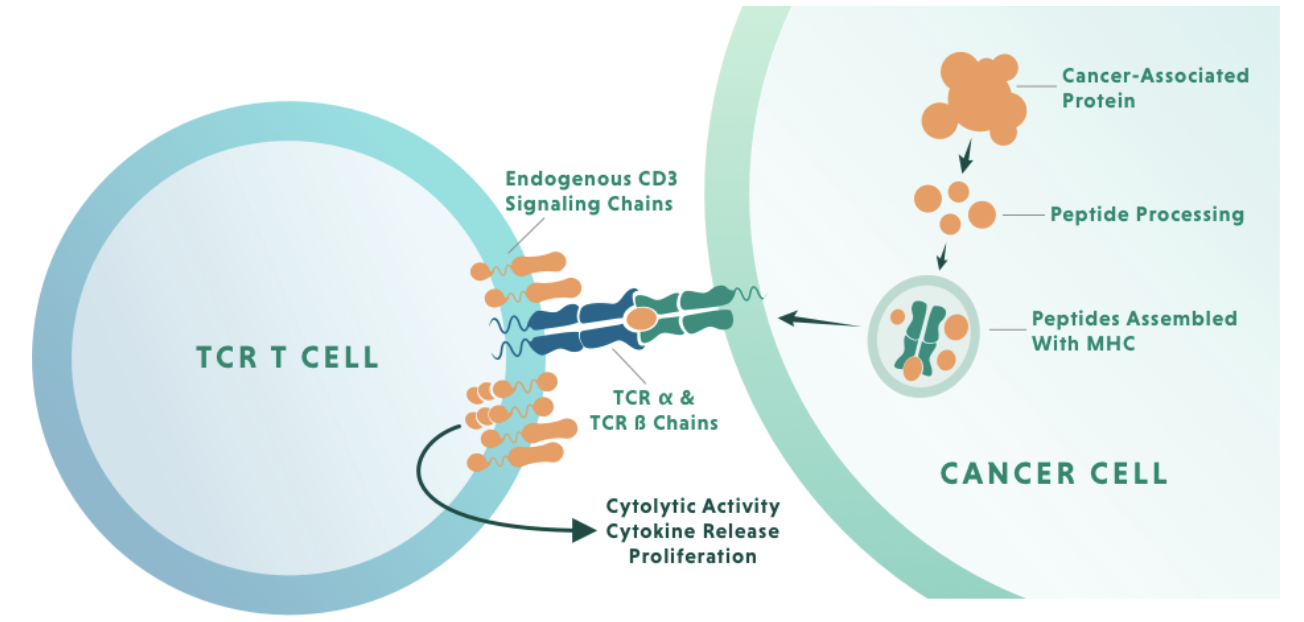
T-Cell Receptor (TCR) therapy can only recognize small pieces of proteins when they are shown on a cell’s surface by molecules called the major histocompatibility complex (MHC). In contrast, CAR-T cells are engineered to recognize whole markers, called antigens, directly on the surface of cells—such as proteins or sugars found on cancer cells—without needing MHC. This difference is important because TCR therapy can target proteins from inside cancer cells(as long as they are presented on MHC, while CAR-T cells mainly target proteins found on the cell surface.
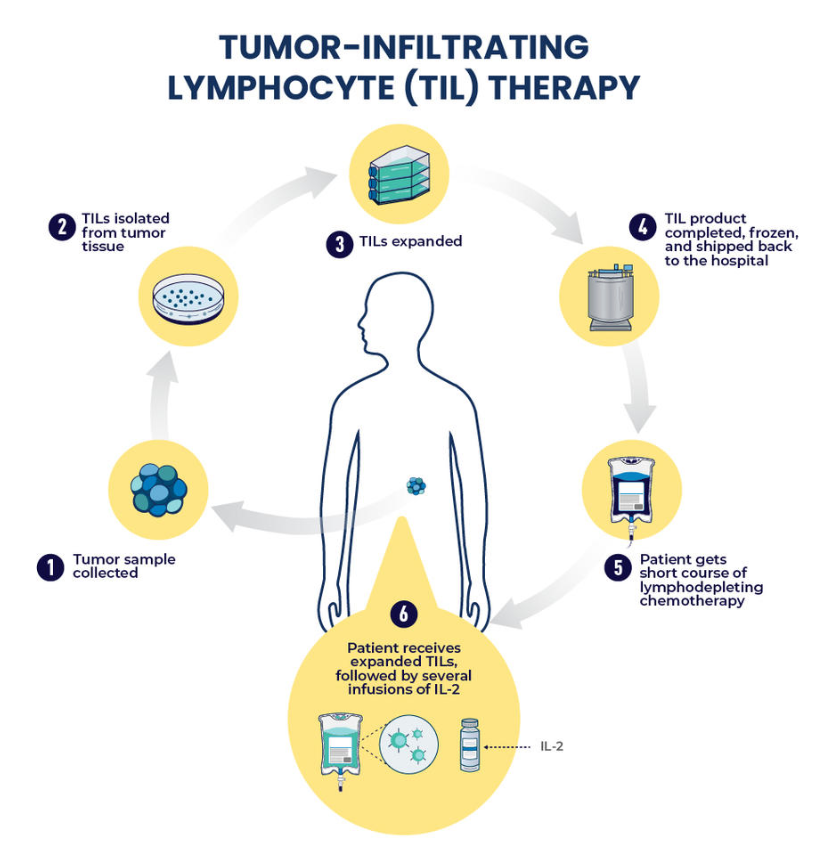
In tumor-infiltrating lymphocyte (TIL) therapy, a surgeon removes a small piece of the tumor. Inside that tumor are special immune cells called TILs, which have already proven themselves to be proficient at locating the cancer in attempts to fight it. The problem is, they often need a boost to become strong enough to win.
Once the sample is frozen and shipped to a laboratory, scientists grow and multiply these TIL cells to the billions, a process that takes 5-6 weeks. Even though this is certainly a longer period than CAR-T therapy, this is because scientists are expanding a small, rare population of immune cells directly from a patient's surgically removed tumor, whereas CAR-T cells are engineered from abundant T-cells in the blood. Scientists sometimes add growth factors or other treatments to make the TILs more powerful and better at recognizing and attacking cancer cells. During this process, the patient receives a short round of chemotherapy to clear out some of their existing immune cells that aren’t as effective, clearing the path for the new, supercharged TILs.
Once the boosted TILs are ready, they are infused back into the patient’s bloodstream. Now, these enhanced immune cells can hunt down and destroy cancer cells more effectively. Afterward, the patient traditionally receives another form of immune support called IL-2 to help the immune system better mobilize the TILs against the cancer. IL-2 is known to have significant side effects that can make it difficult for patients to tolerate, so there are ongoing efforts to replace the need for IL-2.
However, TIL is notoriously expensive – the drug alone costs approximately $515,000 not including the surgery, the IL-2, the chemotherapy, or the required hospitalization for safety and monitoring. Complete treatment courses often exceed $1 million. This is reminiscent of a case in Pennsylvania where a bespoke CRISPR therapy for an infant approached $2 million despite the patient having a single-well defined genetic mutation to repair. This case and that of TIL therapies underscore the extraordinary costs of mobilizing top researchers, infrastructure, and nationwide coordination. Healthcare insurance companies are navigating treatment coverage, but a critical need remains to make TIL and other personalized treatments more affordable and accessible to patients, especially since TIL-authorized centers tend to be major academic centers far from rural populations.
Currently, TIL therapy is approved only for metastatic melanoma, a type of skin cancer that begins in pigment-producing cells and has spread to other parts of the body. All types of melanoma are eligible for this treatment except for uveal melanoma of the eye, which carries a distinct genetic mutation that is still being studied. Patients with untreated or symptomatic brain metastases are also ineligible for this treatment, partly because IL-2 can cause swelling in the brain. Only 31.4% of patients had their tumors shrink or disappear from TIL, so more work needs to be done in understanding how to boost this efficacy, increase treatment durability, and broaden patient eligibility.
Dr. Allison Betof, MD, PhD, Director of the Melanoma Program and Director of Solid Tumor Cellular Therapy at Stanford University School of Medicine, is a leader in exactly this kind of work. She explains that tumor-infiltrating lymphocyte (TIL) therapy is not new—it dates back several decades, with major advances beginning in the 1980s—yet it has only recently reached a milestone with the FDA approval of lifileucel in 2024, the first TIL therapy for metastatic melanoma. Dr. Betof recalls that within just 24 hours of this approval, her team was already prepared to treat an eligible patient, highlighting how quickly scientific progress can translate into real-world care.
While immune checkpoint inhibitors (ICIs), drugs that help the immune system recognize and attack cancer by removing the “brakes” on T cells, have transformed cancer treatment, their impact has limits. Some patients experience remarkable, long-lasting responses, but a growing number see their tumors continue to progress despite treatment. For Dr. Betof, TIL therapy represents an exciting new direction: a potential one-time treatment approach. Although it is not a cure for everyone, its success in melanoma suggests that similar strategies could one day be applied to other solid tumors. Currently, lifileucel is used only after other treatments have failed, but researchers are beginning to ask whether it might be even more effective if given earlier.
The TIL treatment process itself is demanding, requiring significant physical and emotional commitment from patients. However, Dr. Betof and her team work closely with each individual to guide them through every step. Observing her in the clinic makes it clear that her contributions extend far beyond the laboratory. In addition to leading a research program at Stanford and sharing her expertise globally, she places deep emphasis on building meaningful relationships with her patients. Much of her work involves thoughtful conversations, helping patients weigh treatment options in the context of their medical history, personal values, and goals. Together, these advances point not only to growing scientific promise, but also to a more compassionate, patient-centered future: where innovation and human connection work hand in hand to bring hope to those facing cancer.